מפגש 30 · הטמעת AI בארגונים
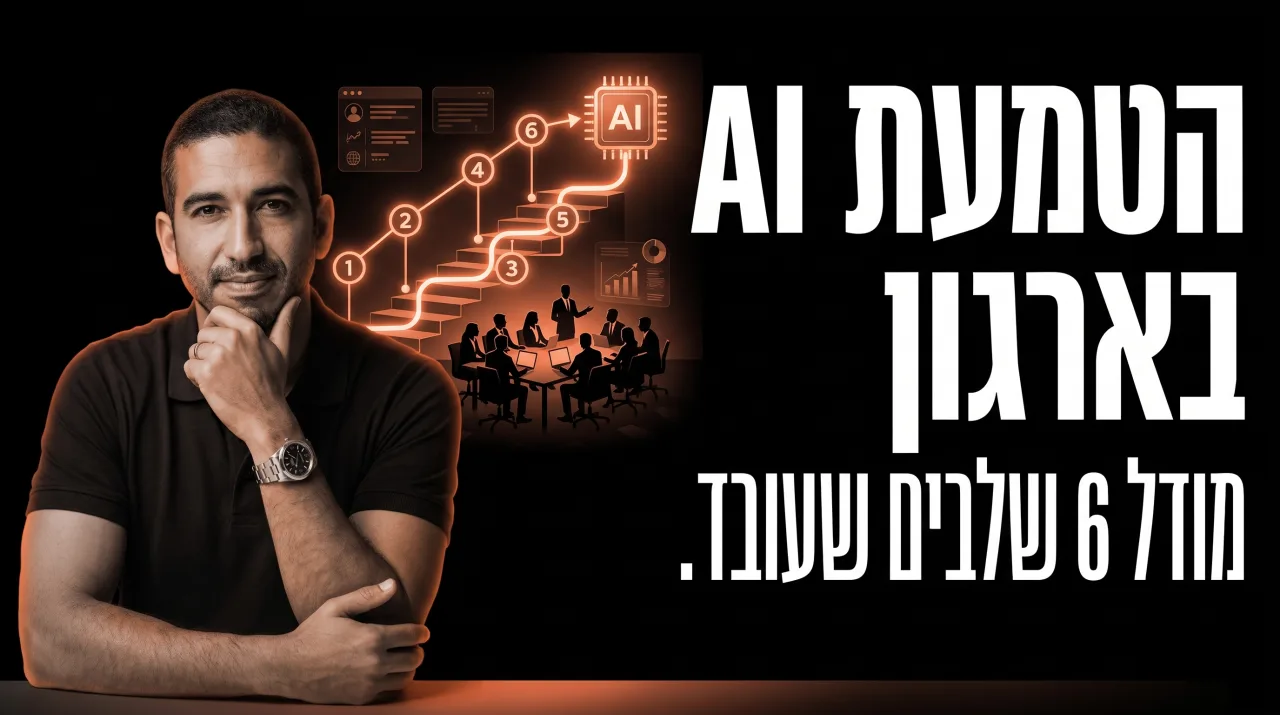
הטמעת AI בארגונים · מודל 6 שלבים שעובד, ולמה 95% מהפיילוטים נכשלים
95% מפיילוטי ה-AI בארגונים לא מגיעים לשורה התחתונה. מדריך מעשי להטמעת בינה מלאכותית בארגון: מודל 6 שלבים, מודל בשלות, תוכנית 90 יום, מדיניות שימוש להעתקה, תיקון 13 ומדידת ROI. מבוסס על מפגש 30 במועדון AI Master עם נעמה מרוז ממשרד החינוך ועל מחקרי MIT.
מאת עמיחי שקל · פורסם · עודכן
בקצרה
קניתם רישיונות, העברתם הרצאת השראה, ואולי אפילו הרצתם פיילוט. חצי שנה אחרי, חצי מהעובדים עדיין לא נכנסו לכלי, והחצי השני מדביק מידע של לקוחות לגרסה החינמית בטלפון.
זה לא כישלון שלכם. זה הדפוס הנפוץ. MIT מצא ש-95% מפיילוטי ה-GenAI בארגונים לא מייצרים השפעה מדידה על השורה התחתונה. הבעיה כמעט אף פעם לא הטכנולוגיה. הבעיה היא ההטמעה.
המדריך הזה בנוי על מפגש 30 במועדון AI Master עם נעמה מרוז, מובילת תחום הבינה המלאכותית במִנהל חדשנות וטכנולוגיה במשרד החינוך, ועל מחקרים עם מקור. בפנים: מודל 6 שלבים, מודל בשלות, תוכנית 90 יום, תבנית מדיניות שימוש להעתקה, תיקון 13, ניהול שינוי, טבלת KPI ופרומפטים מוכנים.
מה תקבלו מהמדריך
- למה 95% מהפיילוטים נתקעים, ומה עושים ה-5% האחרים
- מודל בשלות בארבע רמות · לדעת בדיוק איפה הארגון שלכם עומד
- 6 שלבי הטמעה, מהגדרת מטרה ועד סקייל
- תוכנית 90 יום שאפשר להציג בישיבת הנהלה מחר
- מי אחראי על מה · ועדת היגוי, Owner מחלקתי ו-Champions
- תבנית מדיניות שימוש ב-AI להעתקה, כולל מה אסור להזין לכלים
- Shadow AI, תיקון 13 לחוק הגנת הפרטיות ואבטחת מידע
- טבלת KPI למדידת ROI ופרומפטים שחוסכים שבועות של עבודה
מה זה הטמעת AI בארגון · ומה ההבדל מקורס לעובדים
הטמעת AI בארגון היא שינוי של תהליכי עבודה, לא רכישה של כלי. היא כוללת שלושה דברים שקורים במקביל: שינוי בתהליכים (איך העבודה נראית ביום רגיל), רכישת כלים ומיומנויות, ושינוי תרבותי (מה מותר, מה מצופה, ועל מה מדברים בישיבות).
קורס AI לעובדים הוא רכיב אחד בתוך זה. קורס מלמד איך כותבים פרומפט. הטמעה קובעת איזה תהליך משתנה, מי אחראי עליו, איך מודדים אותו ומה קורה אחרי שהמדריך הולך הביתה. ארגון שעושה רק קורס מקבל שבוע של התלהבות, ואז הכול חוזר לקדמותו.
איפה ישראל עומדת · נתוני הלמ"ס
המצב בישראל: לפי סקר המגמות בעסקים של הלמ"ס מיוני 2025, כפי שנותח במכון הישראלי לדמוקרטיה, 28% מהעסקים השתמשו ב-AI בחצי השנה שקדמה לסקר. עוד 29% ענו "לא יודע" לגבי התוכניות שלהם לחצי השנה הבאה, ובענפים המסורתיים השיעור גבוה יותר.
במילים אחרות, רוב הארגונים בישראל עדיין בתחילת הדרך. מי שבונה תהליך מסודר עכשיו לא מדביק פער. הוא יוצר יתרון.
למה 95% מהפיילוטים נכשלים · ממצאי MIT
באוגוסט 2025 פרסמה יוזמת NANDA של MIT דוח שמבוסס על 150 ראיונות, סקר של 350 עובדים וניתוח של 300 הטמעות. הממצא: כ-5% מפיילוטי ה-GenAI הביאו האצה מהירה בהכנסות. 95% הניבו השפעה קטנה או אפסית על הרווח וההפסד.
לפי הדוח, הסיבה אינה איכות המודלים. הכלים הגנריים לא לומדים את תהליכי העבודה של הארגון ולא מותאמים אליהם. ארגונים שקנו פתרונות מספקים מתמחים וחיברו אותם לתהליך ספציפי הצליחו יותר מארגונים שבנו הכול לבד. ועוד ממצא חשוב: התקציבים זורמים בעיקר לשיווק ומכירות, אבל ה-ROI הגדול ביותר נמצא דווקא בבק-אופיס · צמצום מיקור חוץ, סוכנויות ותפעול.
המסקנה המעשית: פיילוט שלא מחובר לתהליך עבודה אמיתי, עם בעלים ועם מדד, הוא הדגמה. לא הטמעה.
מקור: Fortune, 18 באוגוסט 2025, על דוח MIT NANDA · fortune.com/2025/08/18/mit-report-95-percent-generative-ai-pilots-at-companies-failing-cfo
מודל בשלות AI בארגון
- רמה 1 · שימוש ספונטני · אין מדיניות ואין כלי מאושר. עובדים משתמשים בחשבונות פרטיים, וההנהלה לא יודעת מה נכנס לאן.
- רמה 2 · ניסויים מבוזרים · יש רישיונות לכלי אחד והדרכה כללית. השימוש תלוי בכמה עובדים נלהבים, ואין מדידה.
- רמה 3 · הטמעה מנוהלת · יש מדיניות, סל כלים מאושר, Owner לכל מחלקה ו-2-3 תהליכים שעברו פיילוט עם מדד לפני ואחרי.
- רמה 4 · ארגון AI-First · AI מובנה בתהליכי הליבה, יש סוכנים שמבצעים משימות, הכשרה לפי תפקיד, ודוח ROI רבעוני להנהלה.
בדיקה עצמית · חמש שאלות
כדי לדעת באיזו רמה אתם, ענו בכנות על חמש שאלות: יש מסמך מדיניות שימוש שהעובדים קראו? יש כלי מאושר שהארגון משלם עליו? יש אדם אחד שהנושא כתוב בתיאור התפקיד שלו? יש לפחות תהליך אחד שנמדד לפני ואחרי? יש דיווח קבוע להנהלה?
0-1 תשובות חיוביות · רמה 1. 2-3 · רמה 2. 4 · רמה 3. 5, ועם סוכנים בתהליכי ליבה · רמה 4.
שלב 1 · מטרות עסקיות ומדד הצלחה
הגדירו 2-3 יעדים עסקיים, לא טכנולוגיים. לא "להטמיע Copilot" אלא "לקצר זמן מענה לפניית לקוח מ-24 שעות ל-4" או "לחסוך 10 שעות שבועיות בהפקת הצעות מחיר". יעד בלי מספר הוא משאלה.
שלב 2 · מיפוי תהליכים ובחירת Use Cases
מפו את התהליכים החוזרים בכל מחלקה, וסווגו כל אחד לשלוש קטגוריות: מה AI יכול לעשות לבד, מה דורש Human in the Loop, ומה רק בני אדם עושים. בחרו 3-5 Use Cases לפי שני צירים: כמה זמן או כסף הם חוסכים, וכמה קל להתחיל. התחילו מהרבע של "ערך גבוה, קל לביצוע". לפי MIT, בבק-אופיס מסתתר לעיתים קרובות ה-ROI הגבוה ביותר.
שלב 3 · דאטה, כלים ואבטחה
לפני שמחברים כלי, בודקים איזה מידע הוא צריך ואיפה המידע הזה יושב: CRM, תיקיות משותפות, מערכת כספים. קובעים מה מותר להזין ומה לא, בוחרים כלים ברישיון עסקי (שבו ברירת המחדל היא שהמידע לא משמש לאימון המודל), ומגדירים הרשאות. זה השלב שכולם רוצים לדלג עליו, וזה השלב שמונע את התקלה הראשונה.
שלב 4 · פיילוט ממוקד עם Sandbox
פיילוט של 4-6 שבועות, צוות קטן של 5-15 אנשים, תהליך אחד. מודדים את המצב לפני, מריצים, ומודדים אחרי. קריטריון הצלחה נקבע מראש. חשוב מכול: מתכננים מההתחלה פיילוט שאפשר להרחיב. אם הוא עובד רק בזכות עובד אחד מוכשר, זה לא פיילוט, זו הופעה.
נעמה הציעה כאן את רעיון ה-AI Sandbox: ארגז חול עם Guardrails מוגדרים, שבו אפשר להריץ ניסויים בטוחים בלי לחכות לאישור מלא של כל כלי חדש.
שלב 5 · הכשרה לפי תפקיד
לא הדרכה אחת לכולם. הכשרה לפי תפקיד (Role-Based Training): איש מכירות לומד איך AI מכין לו שיחה, כספים לומדים התאמות ודוחות, HR לומד סינון קורות חיים וכתיבת מודעות. במקביל מזהים Champions, עובדים שכבר משתמשים, ונותנים להם זמן ומנדט לעזור לאחרים.
שלב 6 · סקייל ומדידה שוטפת
מה שעבד בפיילוט הופך לנוהל: תבנית, פרומפט שמור, סוכן או אוטומציה. מרחיבים מחלקה אחר מחלקה, ומדווחים להנהלה פעם ברבעון על המדדים. בשלב הזה כדאי לבחון סוכני AI שמבצעים משימות שלמות, לא רק עונים על שאלות.
אזהרה מהמפגש: היזהרו מ"טוקן מקסינג", מדידת הצלחה לפי כמות השימוש או הטוקנים. זה מייצר חשבונית מפתיעה בסוף החודש ולא מוכיח ערך. מודדים תוצרים, לא צריכה.
תוכנית 90 יום להטמעת AI בארגון
- ימים 1-14 · מינוי Owner וועדת היגוי קטנה, סקר שימוש אנונימי בקרב העובדים (כולל כלים פרטיים), קביעת 2-3 יעדים עסקיים
- ימים 15-30 · פרסום מדיניות שימוש, בחירת סל כלים מאושר ברישיון עסקי, מיפוי תהליכים ובחירת 3 Use Cases
- ימים 31-45 · הדרכת בסיס לכולם (שעתיים), מדידת מצב קיים בתהליכים שנבחרו, גיוס Champions
- ימים 46-75 · פיילוט ב-2-3 צוותים, פגישת סטטוס שבועית של 30 דקות, תיעוד פרומפטים ותבניות שעובדים
- ימים 76-90 · מדידה מול המצב הקיים, החלטה על הרחבה או עצירה לכל Use Case, מצגת תוצאות להנהלה ותוכנית לרבעון הבא
תפקידים ובעלות · מי אחראי על מה
הטמעה נכשלת כשהיא "של כולם", כלומר של אף אחד. שלוש רמות אחריות, לפי המודל שנעמה הציגה:
רמה ארגונית · ההנהלה וועדת ההיגוי. קובעים אסטרטגיה, מאשרים סל כלים ותקציב, מפרסמים מדיניות ומכשירים מנהלים בכירים. נקודת הכשל: פער בין מה שהמטה מתכנן למה שקורה בשטח.
רמה מחלקתית · Owner בכל מחלקה. מחבר בין המטה לשטח, ממפה תהליכים, מריץ פיילוטים ומודד. נקודת הכשל: הטמעה על תהליכים שלא מופו, ומדידה שסופרת רק כניסות לכלי.
רמה אישית · Champions והעובדים עצמם. ייעוץ אחד על אחד, קהילה פנימית, ועובדים שבונים תהליכים בעצמם במקום שהכול יעבור דרך ה-IT. נקודת הכשל: הצפה בכלים והדרכות בלי חיבור לתוצאה.
ארבע אסטרטגיות הטמעה · איזו מתאימה לכם
- כפתור למרק · מתחילים בכלי אחד ומעבים בהדרגה. צמיחה טבעית, אבל אפשר להישאר "כמעט שם" לאורך זמן
- סוס מוביל · מתמקצעים לעומק בסט כלים אחד, למשל Microsoft Copilot או Google Gemini. עומק במקום רוחב, פחות גמישות
- ג'ונגל · כל אחד משתמש במה שהוא רוצה והארגון לומד מהשטח. חדשנות מלמטה, אבל אבטחת המידע מתרופפת
- הצפה · כולם מקבלים גישה לכל הכלים בבת אחת. אין חסמים, ואין פוקוס
טיפ
אין אסטרטגיה נכונה לכולם. בודקים ארבעה דברים: עד כמה ההנהלה מעורבת, האם יש ציפייה מלמעלה, כמה משאבים הארגון מוכן לתת, והאם הדחיפה מגיעה מההנהלה או מהעובדים. ארגון עם הנהלה מעורבת ותקציב יכול ללכת על סוס מוביל. ארגון שבו העובדים כבר שם יתחיל בכפתור למרק, עם מדיניות ברורה.
Shadow AI · העובדים כבר משתמשים, השאלה במה
Shadow AI הוא שימוש של עובדים בכלי AI שהארגון לא אישר, בדרך כלל בחשבון הפרטי. לפי דוח MIT NANDA, ב-90% מהחברות שנבדקו עובדים משתמשים בכלי AI אישיים בעבודה, בעוד שרק כ-40% מהחברות רכשו מנוי רשמי.
איסור גורף לא עובד. העובדים פשוט ימשיכו מהטלפון. מה שעובד: לתת כלי מאושר שטוב לפחות כמו הגרסה הפרטית, לפרסם מדיניות קצרה וברורה, ולהגדיר מה אסור להזין. סקר אנונימי בשבוע הראשון יגלה לכם אילו כלים כבר בשימוש, וזה בדיוק המקום להתחיל ממנו.
מקור: Forbes, 26 באוגוסט 2025, על דוח MIT NANDA · forbes.com/sites/jasonsnyder/2025/08/26/mit-finds-95-of-genai-pilots-fail-because-companies-avoid-friction
תבנית מדיניות שימוש ב-AI לארגון · להעתקה
מדיניות שימוש ב-AI · [שם הארגון]
גרסה 1.0 · תאריך: [תאריך] · בעלים: [שם ותפקיד]

1. מטרה
לאפשר לעובדים להשתמש בכלי AI כדי לעבוד מהר וטוב יותר, תוך שמירה על מידע הלקוחות, העובדים והארגון.

2. כלים מאושרים
- [שם הכלי, למשל ChatGPT Business / Claude Team / Gemini ל-Workspace] ברישיון הארגוני בלבד
- כלי שלא מופיע ברשימה דורש אישור של [Owner / IT] לפני שימוש
- אין להשתמש בחשבון פרטי או חינמי לעבודה עם מידע של הארגון

3. מה מותר להזין לכלים המאושרים
- טיוטות, רעיונות, מחקר ציבורי, תוכן שיווקי
- מסמכים פנימיים שאינם מסווגים כרגישים

4. מה אסור להזין לשום כלי AI
- מספרי תעודת זהות, פרטי אשראי וחשבונות בנק
- מידע רפואי, מידע על עובדים (שכר, הערכות, מצב אישי)
- מידע על לקוחות שמזהה אותם, אלא אם הכלי אושר לכך במפורש
- סיסמאות, מפתחות API, קוד מקור מסווג
- מידע שחל עליו הסכם סודיות

5. בדיקה ואחריות
- כל תוצר של AI נבדק על ידי אדם לפני שהוא יוצא ללקוח, לרשות או לפרסום
- האחריות על התוצר היא של העובד, לא של הכלי
- אין לקבל החלטות על עובדים או לקוחות על סמך AI בלבד

6. שקיפות
- תוכן שנוצר ברובו על ידי AI ופונה ללקוח יסומן כשנדרש בחוק או בנוהל
- שימוש ב-AI אינו דבר שיש להסתיר. שתפו פרומפטים שעובדים בערוץ [שם הערוץ]

7. דיווח על תקלה
הזנתם בטעות מידע רגיש? דווחו תוך 24 שעות ל-[שם / מייל]. דיווח מהיר אינו עבירה.

8. עדכון
המדיניות נבדקת כל 6 חודשים או עם כניסת כלי חדש.
הדביקו בכלי המתואר במדריך. מלאו את הפרטים שבסוגריים ובדקו את התוצאה מול המקור.
שימו לב
התבנית היא נקודת פתיחה, לא ייעוץ משפטי. בארגון שמעבד מידע רגיש בהיקף גדול, הריצו אותה מול היועץ המשפטי או הממונה על הגנת הפרטיות לפני פרסום.
פרטיות, אבטחה ורגולציה בישראל · תיקון 13
תיקון 13 לחוק הגנת הפרטיות נכנס לתוקף ב-14 באוגוסט 2025. הוא הרחיב את סמכויות האכיפה של הרשות להגנת הפרטיות, כולל עיצומים כספיים משמעותיים, והגדיר חובת מינוי ממונה על הגנת הפרטיות בחלק מהארגונים.
מה זה אומר להטמעת AI: כל פעם שעובד מדביק מידע אישי של לקוח לכלי AI, זה עיבוד מידע אישי. צריך לדעת איזה מידע יוצא, לאיזה ספק, ולאיזו מטרה. שלושה צעדים מעשיים: להשתמש רק בכלים ברישיון עסקי עם הסכם עיבוד נתונים, לעדכן את מיפוי מאגרי המידע כך שיכלול את כלי ה-AI, ולהכניס את סעיף "מה אסור להזין" לנוהל אבטחת המידע.
לפירוט מלא על פרטיות, זכויות יוצרים ו-AI בישראל, יש לנו מדריך נפרד בקישורים למטה.
הכשרה וניהול שינוי · איך מתמודדים עם התנגדות
משרד החינוך הריץ "חודש בינה מלאכותית" עם כל הרכיבים: הכשרות, קהילה, פומו חיובי. ועדיין ההטמעה לא הייתה מלאה. נעמה הסבירה למה: ניהול שינוי חייב לקרות בארבעה רכיבים במקביל.
שינוי תהליכי · העבודה נראית אחרת ביום רגיל, לא רק בהדרכה. שינוי קוגניטיבי · מסבירים למה כדאי, לא רק איך. שינוי רגשי · יש עובדים שפוחדים לאבד את העבודה, או שפשוט לא יודעים מאיפה להתחיל. מתייחסים לזה בגלוי. שינוי בשיח · מדברים AI בישיבות, משתפים הצלחות קטנות, ומנהלים מראים שהם עצמם משתמשים.
מה שעובד מול התנגדות: Champions מתוך הצוות במקום מדריך חיצוני, ייעוץ אחד על אחד, והצלחה ראשונה קטנה ומהירה. מי שמצליח לוקח פרויקטים קטנים ומשדרג אותם. מי שמתקשה מנסה לבנות פרויקט ענק במכה אחת.
חמישה צעדים ליצירת שינוי · מהמפגש
- בחרו מטרה · איך תיראה הצלחה, גם ברמה האישית
- בחרו קהל יעד · על מי בדיוק אתם רוצים להשפיע
- בחרו כיוון · מההנהלה למטה או מהשטח למעלה
- הגדירו דרישת מינימום · מה חייב לקרות כדי לומר שהצלחנו
- מדדו · לא רק שימוש, גם תוצרים ותהליכים, והחליטו מראש איך (סקר, נתוני שימוש, זמן ביצוע)
איך מודדים ROI · טבלת KPI
מדידה של "כמה עובדים נכנסו לכלי" היא מדד אימוץ, לא מדד ערך. צריך את שניהם. הטבלה הבאה מחלקת את המדדים לארבע קבוצות, ולכל אחת דוגמה ואיך מודדים.
אימוץ · אחוז עובדים פעילים שבועית בכלי המאושר · נתוני אדמין של הכלי.
יעילות · זמן ממוצע לביצוע משימה (הצעת מחיר, מענה לפנייה, סיכום פגישה) לפני ואחרי · מדידה ידנית על מדגם של 20 משימות.
איכות · אחוז תוצרים שעברו בלי תיקון מהותי, שביעות רצון לקוח · בדיקת מנהל, סקר NPS.
כסף · שעות שנחסכו כפול עלות שעה, פחות עלות רישיונות והכשרה · חישוב רבעוני.
נוסחה פשוטה להנהלה: ROI = (שעות שנחסכו בחודש × עלות שעה ממוצעת + חיסכון בספקים) פחות עלות חודשית של כלים והכשרה, חלקי העלות. אם אין לכם מדידת "לפני", אין ROI. לכן המדידה נכנסת כבר לימים 31-45 בתוכנית.
פרומפט 1 · מיפוי Use Cases לפי מחלקה
אתם מומחים להטמעת AI בארגונים. הארגון שלי: [תחום], [מספר עובדים] עובדים, מחלקות: [רשימה].
כלים שכבר בשימוש: [רשימה או "לא ידוע"].

משימה:
1. לכל מחלקה, מפו 5 תהליכים חוזרים שבהם AI יכול לחסוך זמן.
2. לכל תהליך סווגו: AI לבד / AI עם בדיקת אדם / אדם בלבד.
3. דרגו כל תהליך בציון 1-5 לחיסכון וציון 1-5 לקלות ביצוע.
4. החזירו טבלה ממוינת לפי מכפלת הציונים, ובחרו את 3 ה-Use Cases לפיילוט הראשון עם מדד הצלחה מספרי לכל אחד.
כתבו בעברית פשוטה, בלי ז'רגון.
הדביקו בכלי המתואר במדריך. מלאו את הפרטים שבסוגריים ובדקו את התוצאה מול המקור.
פרומפט 2 · תוכנית 90 יום מותאמת
בנו לי תוכנית הטמעת AI ל-90 יום עבור [שם הארגון / תחום].
יעדים עסקיים: [2-3 יעדים עם מספר].
Use Cases לפיילוט: [רשימה].
משאבים: [תקציב חודשי], [מספר שעות שבועיות של ה-Owner].

חלקו לחמישה שלבים (ימים 1-14, 15-30, 31-45, 46-75, 76-90). לכל שלב: משימות, אחראי, תוצר, ומדד שמוכיח שהשלב הושלם.
בסוף הוסיפו 5 סיכונים מרכזיים ואיך מצמצמים כל אחד.
הדביקו בכלי המתואר במדריך. מלאו את הפרטים שבסוגריים ובדקו את התוצאה מול המקור.
פרומפט 3 · הודעה לצוות וטיפול בהתנגדויות
אני מנהל/ת צוות של [מספר] עובדים ב-[מחלקה]. חלק מהצוות חושש מ-AI.
החששות ששמעתי: [לדוגמה "זה יחליף אותי", "אני לא טכנולוגי", "זה טועה"].

כתבו לי:
1. הודעה קצרה לצוות (עד 120 מילה) שמסבירה למה אנחנו מתחילים ומה לא ישתנה.
2. תשובה אמפתית וקונקרטית לכל חשש.
3. שלוש משימות ראשונות קטנות, של עד 15 דקות כל אחת, שכל עובד יכול להצליח בהן בשבוע הראשון.
הדביקו בכלי המתואר במדריך. מלאו את הפרטים שבסוגריים ובדקו את התוצאה מול המקור.
תקציב וזמנים · כמה זה עולה בפועל
תקציב ההטמעה מורכב משלושה חלקים: רישיונות (בדרך כלל עשרות דולרים לעובד בחודש לתוכניות עסקיות של ChatGPT, Claude או Gemini, בדקו מחיר עדכני באתר הספק), זמן Owner פנימי (4-8 שעות בשבוע בתקופת ה-90 יום), והכשרה. תוכנית 90 הימים עצמה היא לוח הזמנים הריאלי לפיילוט ראשון עם תוצאות מדידות. סקייל לכל הארגון לוקח בדרך כלל עוד 2-3 רבעונים.
מדריכים ומקורות
שאלות נפוצות על הטמעת AI בארגונים
כמה זמן לוקח להטמיע AI בארגון?
פיילוט ראשון עם תוצאות מדידות לוקח כ-90 יום, לפי התוכנית במדריך. הרחבה לכל הארגון לוקחת בדרך כלל עוד 2-3 רבעונים, תלוי במספר המחלקות ובמורכבות המידע.
כמה עולה הטמעת AI בארגון?
שלושה רכיבים: רישיונות עסקיים (בדרך כלל עשרות דולרים לעובד בחודש, בדקו מחיר עדכני אצל הספק), זמן של Owner פנימי של 4-8 שעות בשבוע, והכשרה. פיילוט ב-2-3 צוותים הוא הדרך הזולה לגלות מה באמת מחזיר את ההשקעה.
למה רוב פרויקטי ה-AI בארגונים נכשלים?
לפי דוח MIT NANDA מ-2025, 95% מפיילוטי ה-GenAI לא מייצרים השפעה מדידה על הרווח. הסיבה העיקרית היא כלים גנריים שלא מחוברים לתהליכי העבודה, ולא איכות המודלים. פיילוט עם בעלים, תהליך אחד ומדד לפני ואחרי משנה את התמונה.
צריך צוות טכני כדי להטמיע AI?
לא לשלב הראשון. רוב ה-Use Cases הראשונים (סיכומים, הצעות מחיר, מענה לפניות, דוחות) עובדים בכלים מוכנים. צוות טכני נדרש כשמחברים AI למערכות פנימיות או בונים סוכנים, וגם שם כלים כמו Claude Code מקצרים מאוד את הדרך.
מה ההבדל בין הטמעת AI לקורס AI לעובדים?
קורס מלמד עובדים להשתמש בכלי. הטמעה משנה תהליך עבודה, קובעת מי אחראי, מגדירה מדיניות ומודדת תוצאה. קורס בלי הטמעה נותן שבוע של התלהבות. הטמעה בלי הכשרה נתקעת בהתנגדות. צריך את שניהם.
איך שומרים על פרטיות ואבטחת מידע?
משתמשים רק בכלים ברישיון עסקי, מפרסמים מדיניות שמגדירה מה אסור להזין (תעודות זהות, מידע רפואי, פרטי לקוחות מזהים, סיסמאות), ומעדכנים את נוהל אבטחת המידע בהתאם לתיקון 13 לחוק הגנת הפרטיות, שנכנס לתוקף ב-14 באוגוסט 2025.
מה זה Shadow AI ואיך מתמודדים איתו?
Shadow AI הוא שימוש בכלים לא מאושרים, בדרך כלל בחשבון פרטי. לפי MIT, ב-90% מהחברות עובדים משתמשים בכלים אישיים, ורק כ-40% מהחברות רכשו מנוי רשמי. איסור לא עובד. נותנים כלי מאושר טוב, מדיניות ברורה, וסקר אנונימי כדי לדעת מה כבר בשימוש.
מה עושים כשעובדים מתנגדים ל-AI?
מתחילים מהסבר למה, לא רק איך. מתייחסים בגלוי לחשש מאובדן עבודה, מגייסים Champions מתוך הצוות, ונותנים משימות ראשונות קטנות שאפשר להצליח בהן תוך 15 דקות. הצלחה מהירה אחת שווה יותר מעשר מצגות.
איך מודדים הצלחה ו-ROI של AI?
מודדים ארבע קבוצות: אימוץ (אחוז משתמשים פעילים), יעילות (זמן משימה לפני ואחרי), איכות (תוצרים בלי תיקון) וכסף (שעות שנחסכו כפול עלות שעה, פחות עלות כלים). בלי מדידת מצב קיים לפני הפיילוט, אי אפשר להוכיח ROI.
AI מתאים רק לחברות גדולות?
לא. כ-28% מהעסקים בישראל כבר השתמשו ב-AI לפי סקר הלמ"ס מיוני 2025, ועסק קטן יכול להתחיל מהר יותר מארגון גדול כי יש פחות אישורים. לגרסה המותאמת לעסקים קטנים יש מדריך נפרד באתר.
חשוב לדעת
הטמעת AI היא פרויקט של אנשים, לא של כלים. בחרו תהליך אחד, מנו לו בעלים, מדדו לפני ואחרי, ותתחילו השבוע. במועדון AI Master אנחנו מתרגלים את זה כל שבוע, עם כלים חדשים ומקרים אמיתיים מעסקים וארגונים בישראל.